Author Archives: lauraborkpower

Week Three: Summer 2016 Online Writing Group

It’s week three of the second annual Lake Projects Summer Online Writing Group, and everyone is meeting goals and kicking butt! Good work, group!

Last week everyone shared their second week goals and I gave everyone an assignment on using contrast in their pieces. (I’ve got another assignment this week, so prepare yourselves!)

This week, in addition to setting Week Three goals, we welcome two newcomers to the group: Matt (this is our second Matt, thus he will be called Matt The Second [I would use initials from their last names, but both Matts have last names beginning with an “F,” so this is just more fun]) and Tina. Matt is a former student and member of MCC’s creative writing club, Writer’s Block (also alumni of WC are: Alena, Aliena, and Anne D.), and Tina is a culinary instructor and pastry chef at MCC. I’m excited to be expanding the group and can’t wait to see what they’re working on. So welcome, Matt the Second and Tina!

Week Three Goals:

  • Alena: My goal for week three is to read part of a spy-thriller novel by a local author (Dragon Heart by Peter Atterberg) and eventually give him feedback as he continues his series. I also would like to continue to write more on my many works-in-progress. I am approximately 15 pages into my 60-page count goal for these eight weeks.
  • Aliena: (Quick note: Hello other Alena! Great name! o//)Okay, so. Remember how I was going to clean a space to write in?Yeah, about that.Good news: I got furniture! Bad news: I needed to displace my very extensive collection of cardboard boxes filled with junk into my writing area to make room for the aforementioned furniture.As such, my week three goals are as follows:
    1) Clean up my gorram workspace.
    2) Write some gorram words. More specifically, finish the demo scene of the podcast so it can be recorded.
  • Anne D.: My goal this week is to look into magazines to publish a short story. I know Writer’s Digest has lists of magazines that publish by genre so I will try there first. Right now I am looking into historical fiction or general fiction short stories. Any suggestions are welcome! And I have a story idea planned out. Plus I will start to research it this week, hopefully. (Anne, I’d also take a look at the New Pages alphabetical list of literary magazines — it’s a comprehensive and helpful resource)
  • Anne H.: Anne set sail on the Pacific as a means of finding poetic inspiration, so she will submit her goals upon her return to dry land…
  • Bev: I ended up doing three blog posts — busy week and lots to write about! I finished Ch. 8, March. This week I will do my usual blog post and tackle Ch. 9, April.
  • Emily: Realistic goals for this week = three questions for book and three hours revising breast cancer paper.
  • Katherine: Last week I did get some good writing done, but not quite as much as I would have liked. Technically the writing that I did last week was not from my to-do list. I started breaking the entire piece into chapters or sections. Some breaks were easy. Some breaks need more development in order to have the sections make sense independently.Next week I hope to clear up a bit more of my messy chapters and to write the only item currently on my to do list. 
  • Laura: I broke open my big writing project (a detective novel) and am almost finished with the first chapter. I’m really happy with the simple fact that I’ve started it, since for me, starting is the hardest part. I usually let things live in my head forever. But now, this also lives in actual words! The body is about to be discovered, so my goal for this week is to discover the body (that will end the first chapter) and start the second chapter (which will introduce my protagonist).
  • Lisa: This week I hope to write about five more pages. Fingers crossed!
  • Matt: It has been an exhausting week, emotionally, hasn’t it? (Yes.) Under other circumstances I might have processed some of that by writing, but after taking some time to hug people and dwell on the tragedy, I kept working. It was nice to have an exterior focus.

After making a lot of changes and revisions to the first eighty pages of The Liminal Man during week one, I went back to the beginning and started reading through again. As I write this at the end of week two, I’m just a few pages from the end. I’ve concentrated on the back half of the story, removing some more passages, tightening up. On balance, I have only reduced the page count from 149 to 147, which isn’t really worthy of a parade or anything (but it’s Pride week, and there’s no parade here, and it’s been sort of a shitty week for the LGBT community so if any of you feel like giving me a parade, that would be cool). I’ve got eighteen more pages to read tonight though, so maybe I’ll just cut the back nine if I’m craving an inflated sense of accomplishment.

Seriously though, I’m pretty happy with how things are progressing so far. Next up, I will be jumping back to roughly the middle of the story for another read-through, just to get a sense of how the changes  feel from farther away. I’ll probably make more changes. Frankly, I’ve become a bit cavalier about cutting things out, and I’m quite pleased about that. It’s been a long time coming. So week three will probably be about cutting out as much as possible while I’m still feeling brazen.

Matt, here is your parade:

  • Matt the Second: 1) Finish the piece of prose I have started for the Raue’s poetry reading; 2) Look at what I have for my play “The Relationship”, and see how I can revise it to give it a new scene I had imagined. My ultimate goal for this is turn it into a full length play instead of the ten-minute genre it now sits in. This new scene will be the first step in that process; 3) Look at my play “Confusion” to see how to give it more specificity. This one is a ten-minute play as it stands right now as well and I believe it will remain that way. There just seems to be a lack of certainty in location and whether or not both characters have certain traits, if I remember correctly. It’s been a while since I’ve looked at it. Perhaps, it might be a good idea to have it workshopped with how to make it more specific in mind before I start revising it.
  • Mike: For week two, I continued revising one of my nearly-complete short stories as planned. However, I realized after reading it that while my last round of revisions had tightened things up and gotten rid of a lot of excess crap, it left the story with less narrative continuity than I thought. I realized I needed to rewrite it completely, with a specific favorite story in mind for a guide (“Ralph the Duck” by Frederick Busch). I re-read the opening to Busch’s story a bunch of times and then rewrote (and re-read) the first three pages of my story. For week three, now that I have a better vision for my short story, I hope to rewrite the next ten pages of it, leaving the ending (which was never fully written to begin with) for week four. (Mike, you’ve given me something new to read! I’ve never heard of this story and am going to get my hands on it ASAP — thanks!)
  • Ray: Week two goals completed. Three chapters are roughed out and written. 🙂 I think I am only going to go for two this week, though. (Reasonable goals are a writer’s best friend, Ray, so good idea! [although writer’s also like coffee, so…coffee might be a writer’s best friend…let’s think about this for a while].)
  • Robert: Goal: 7,000 words this week.
  • Rosalie: I finished my week two goals of an introduction and four lesson plans for my Spanish Art Tour, but have a real setback going forward. I met with a group of my colleagues and learned that each lesson plan must include a short essay about how the work of art fits into the overall collection. Since I did not include that in my first tour (I think I blocked it out) I have to go back for some major rewriting. I did include your assignment about comparing things in my work since I included contrasts between Protestant and Catholic art in my tour. I think it was interesting. (Glad to hear it, Mom!) Next week I’m going to write the four remaining lessons for Spanish Art and include the essays but intend to put off rewriting the earlier efforts for now. I also wrote and gave a presentation for some colleagues. Not one of them agreed with anything I said, but we had a lively discussion so I guess it was a success? (Yes, it was.)
  • Sarah: Week two was really productive. I finished a paper for one graduate class ahead of schedule! Both classes are done now, woot!

Week three goal is actually not to write but to read. I need a break. This academic year I completed fifteen graduate credits. I’m in Vegas this week, reading a book called Possession, about private collectors of antiquities. Hopefully some fun reading will help me switch gears from writing for assignments to writing for my own interests. (Good writers are constant readers, so good goal for this week, Sarah!)

  • Tina: Big Picture Goal: download my brain. I have many stories rumbling around in my head.
    This week: Flesh out the big story. My Dad was adopted; he was abandoned on V-day in 1945. I have some news articles but mostly questions. Got my DNA done, found some relatives but no real answers yet. If I can’t find answers, I’d like to write my own version of what I imagined life was life for a scared single Mom in 1945.

Now, I mentioned another assignment, so here it is.

Last week I started reading The Sympathizer by Viet Thanh Nguyen. It’s this year’s Pulitzer Prize winner for fiction, and I only had to wait on hold for a few weeks before it was available from my library, which surprised me. The other bookworms in Crystal Lake are clearly too slow on the uptake, and too bad for them because so far it’s terrific (full disclaimer: I’m only 26% through it). Live and learn, library suckers!

Anyway, as I was reading a passage where Nguyen’s protagonist has been called to the office of a man he has betrayed (the General), and he is fearful he’s been found out, I noticed the wonderful details in a few sentences that built the tone — a tone of violence and an alertness to danger and defense. Check it out:

Have a seat, the General said from behind his desk. The vinyl chairs squeaked obscenely when we moved. Cartons and crates hemmed us in on three sides. The General’s desk was cluttered with a rotary-dial phone heavy enough for self-defense, a stamp pad bleeding red ink, a receipt book with a blue sheet of carbon paper tucked between the pages, and a desk lamp with a broken neck, its head refusing to stay raised. (Nguyen 79)

Wonderful, right? Nguyen’s narrator is claustrophobic and attentive to each and every detail that will cause him harm or that he might use to his advantage. It’s a perfect example of the way you can use details to do what you want, what you need them to do.

I am frequently asked by my creative writing students questions like, “How many details are too many details?” and “How do I know what to describe?” What my students, and what all writers should do is to take a page from Nguyen’s playbook and identify which details will contribute to the atmosphere, the conflict, the characters, or the story (and all of these things, if you’re lucky).

And that’s your assignment for this week: go through a scene in your WIP and take a hard look at the details you’ve written. Is each and every single detail there for a purpose? Does it develop your character? Does it add conflict or tension? If it doesn’t, you don’t need it and you need to take it out. That’s right: take it out. (Hint: there is a 98% chance that the color of your protagonist’s hair and eyes are irrelevant to the conflict and story, so take them out [seriously: right now]).

In addition to editing to get rid of irrelevant details, identify places where you can add in some details to amp up what you’re trying to do in that scene (use metaphor, simile, and analogy instead of a lot of adjectives). The lamp in Nguyen’s passage has a “broken neck,” and the ink pad is “bleeding red ink” because our narrator is scared that he’s about to be found out as a traitor and executed. Where can you find these types of details to add into your own work?

For my academic writers, I’ve got a variation for you: remove any extra words, especially adjectives, but take a look at the passages in your work that are very important. Maybe it’s the results/conclusion section of your piece, or maybe it’s near the introduction to clarify the thesis. Wherever it is, ask yourself: will my reader understand the importance of this section? If not, add what you can to make sure the significance is clear. Develop that section more, repeat key words and phrases, or just plain tell your reader that “This is important.” That’s the beauty of academic writing; you’re not trying to be subtle.

Okay, that’s it! Later this week we’ll have a guest post from Katherine, so check back on Wednesday for that. And until then, write well, everyone!

Nguyen, Viet Thanh. The Sympathizer. New York: Grove Press, 2015. Print.

Save

Save

Save

Save

Save

Save

Save

Save

Save

Save

Save

From Secret Lives of Fiction Lovers: My Proofreading Door Is Open!

Hey Online Writing Group! Here’s an opportunity to have someone proofread your work!

Shared from Secret Lives of Fiction Lovers:

Well, folks, it’s that time again where my proofreading door is open to you guys. Especially now that I have a little one and have a bit more free time on my hands (when she’s lets me, of course 😝). So, if you need a second eye to go over your work, feel free to […]

via My Proofreading Door Is Open! — Secret Lives of Fiction Lovers

Week Two: Summer 2016 Online Writing Group

It’s week two of the second annual Lake Projects Summer Online Writing Group, and everyone is trucking along!

Last week everyone shared their big picture and first week goals, and Bev wrote a great guest post that included a link to a 99u speech by Dr. Brené Brown. Bev’s post and Brown’s address gave me clarity, and I hope you take the time to check them out.

This week, in addition to setting Week Two goals, we get some writerly advice, and we welcome Mike to the group. Mike participated in the last summer’s session, and we’re thrilled to have him back this year. His goals are as follows:

My Big Picture goal is to revise or write the first half of a novel in progress, resulting in coherent drafts of chapters that work from start to finish (basically one chapter a week, revising or writing new about 4000 words).

My Week One goal was to revise the first chapter.

Welcome back, Mike!

Week Two Goals:

  • Alena: First of all, shout out to Aliena (because her name is so similar to mine)! Second, and most surprisingly to me, I actually did meet my week one goals. Not only that, but I met them early. I guess deadlines really do help! My week two goals are to finish revising the novel excerpt that I will be reading at the Art on the Fox festival and to rehearse reading it aloud. I also would like to continue the progress I made during week one on a short story, called ‘Two Bakas,’ which is based on a nightmare. My last goal for week two is to proofread my friend’s script.
    (Everyone in the McHenry County area should come to see Alena and a group of other MCC students read their original work at Art on the Fox this Saturday! I’ll be there [in an MCC t-shirt (seriously)] which means that you should come, too!)
  • Aliena: WEEK 2 GOALS: Begin gathering inspiration materials for long-term projects, clean off a workspace in my apartment… still.
  • Anne D.: I’m not sure of my goal for this week. It’s been a heck of a week and life hit me hard this week. I’m going to say the same as last week. (The first couple of weeks are for getting into the swing of things, Anne!)
  • Anne H.: I had an exciting week last week, with some storm damage at my house and then a week of talking to the power company, contractors, insurance people, and the bank. Big fun! I have out-of-town guests this week (I’m still cleaning now), and then a week-long conference next week. So I’m setting my expectations for writing productivity LOW.
    I did not write every day last week, but I did work on the Prince poem yesterday, drafting about half of it, and I’ll keep going this week with that. I also didn’t get my writing area totally set up, but I did make a few chips away at the project, including some set-up this morning. So I’ll keep going there, too.
  • BevThis week: Personal blog post done (visit Bev’s blog, Fiacre’s Spade), guest blog post done, Ch. 7, February done, plus a revisit of Ch. 6, January.
    Next week: Ch. 8, March revisions. Blog post about a trip to the International Crane Foundation (if all goes well and we don’t melt while we are there on Saturday!)
  • Emily: Well, I didn’t make much progress last week, as I forgot I also had to write a grant proposal (maybe this is why I feel like I don’t get anything done). But I got that done pretty much, so this week I am going to have the same goals as last week — write FIVE questions for the book and review a draft of the breast cancer paper and make a plan for revision.
  • Katherine: Week One’s goal of tackling my to do list was successful. I did also add one new complex item to my list for next week.
    Week Two’s goal is to tackle that multifaceted new item on my list. My other hope is to start breaking the work into “chapters.” I know I need length, but my hope is that by breaking the work into chapters or sections, I will see ways to further develop what I have rather than trying to create entirely new concepts that may feel forced and unnecessary.
  • Laura: Although I missed a couple of days of writing last week, I got work done on a BF article and my bigger project. My Week Two objectives are to write our second online writing group blog post, to keep working on the BF article, and to write every day, no matter what.
  • LisaI will be attempting to finish chapter #1 this week. I actually got some good work done last week. Not as much as I would have liked, but it’s a start! Woo Hoo!
    (Ditto your woo hoo, Lisa!)
  • MattWeek One was pretty productive. I worked my way up to the scene I needed to replace, removing all traces of its various antecedents.  
    Plotting out a completely different sequence, one that would satisfy all the same basic needs, was a challenge but I think it has improved the story.
    After finishing that scene and grafting it into the story, I kept moving forward, doing some further revision over about half the length of The Liminal Man. I think the most fun I had was completely cutting a later scene, about four pages that I’ve always loved but always known were probably not right. I replaced it with a single smartass paragraph and I feel a lot better about it.
    However, in spite of this progress, I have yet to meaningfully address the tone problem, which is my whole reason for this set of revisions. It’s a bit dreary and up its own ass, which is sometimes necessary for character reasons. Both the story and the protagonist struggle through and break out of it as we go along, but I am looking for opportunities to give the reader more to respond to than the main character gets. The changes I’ve made this week are generally in that direction, but I have mostly been concerned with just the one scene.
    So, for Week Two, it’s back to the beginning. No specific scene work in mind, no page count, just go back to the beginning and start making it better. (Thank you, Matt, for describing your draft as “a bit dreary and up its own ass”)
  • Mike: My Week Two goal is going to be to already take a break from that big picture goal in order to complete revisions on a short story I want to submit for publication by the end of June.
  • Ray: Week one goals were met, just barely, but I have an outline for one major character from start to finish, and have begun to actually write the storyline. My week two goals are to have three chapters finished, rough draft style by the weekend.
  • Robert: Week Two: 1,000 words a day for a total of 7,000.
  • Rosalie: I did my goal for last week; I finished my European Tour. There were several times during the week where I thought I didn’t have enough time, but I did squeeze the work in. Next week is harder for me because I have a full calendar but I intend to start my Spanish Art tour and write an introduction and three lesson plans.
  • Sarah: I finished my gallery writing project. This week I am writing four pages on Realism and Abstraction in Cubist art. Good times. (It is, Sarah!)

Cheers to everyone, for getting it done!

Now for a bit of writerly advice and a writing assignment. A few weeks ago, I read a terrific article on the Ploughshares blog, and I think that you all might find it interesting (especially Sarah and Rosalie, who are working on writing about visual media).

The article, by Annie Weatherwax, is called “Conflict & Tension: What Writers Can Learn From How Visual Artists Use Contrast.” In the short piece, Weatherwax, who is a visual artist and writer, talks about using contrast in writing. The contrasts between speech and action, between action and tone, and between expectation and reality make for interesting and unique writing. These contrasts can also aid character development, move a plot and story forward, and build an authentic world.

So your assignment this week, writers, is to develop at least one contrast in whatever you’re writing. For our fiction writers, this is easy: where will your character say one thing but mean another? Where will they reveal their authentic self only to belie it on the next page? And why does it matter to the character and to the story? Answer those questions and then write the dialogue or scene. For our non-fiction writers, I’d like you to contrast artists, works, movements, or artistic principles (Sarah & Rosalie), or research practices, expectations, tests, or avenues of information (Emily). What does the contrast say about the the artist, the work, the practice, the science, or the context?

And, yes, I did write that “this is easy,” and of course I will believe it is until I have to do the assignment myself. Once I’ve realized that it is not easy, I will kneel down before you, and you can throw water balloons at me as punishment.

Image Credit: Time

But until then, good writing, everyone!

Save

On Creativity and Criticism

Group member Bev participated in last year’s writing group and wrote an excellent guest post on what she learned about writing and about life from the chickens she raises on her farm.

In this post, Bev shares her ideas about a video of Dr. Brené Brown, professor of sociology and social work at the University of Houston, giving a talk to a group at 99u, a group whose mission is to “empower the creative community.”

This is a guest post from Beverly Dow, a member of this summer’s Online Writing Group:

I came late to social media. Born at the end of the Baby Boom (a circuitous way of saying I’m old), I have privacy issues. My younger friends finally wore me down, and I got on Facebook. For the most part, I agree with Betty White (who is even older) that Facebook is a colossal waste of time. Now and then, however, I come across something transformative. A friend posted a link to a TED talk by Dr. Brené Brown on vulnerability. I was hooked. Watched all her videos. Read her book, Daring Greatly. I won’t say I’m great at embracing vulnerability, but I now when I feel that discomfort, I tell myself, “Hey, I’m daring greatly. Good for me.”

As we start this writing workshop, I want to share this video of Dr. Brown talking to “sweaty creatives” about dealing with critics. The message is to get out of your own way. It isn’t about success or failure. It’s about having the courage to show up and get your ass kicked.

I can do that.

We can all do that! Thanks for sharing, Bev. Now, everyone: reserve the appropriate seats at your arena, and then walk up those stairs and do it.

Week One: Summer 2016 Online Writing Group

Welcome to the first week of the Summer 2016 Online Writing Group!

This is week one of our second summer online writing group (you can read about our first summer group here). We’ve got a terrific group of people participating this summer: some veterans of the group, some new participants, some of my MCC colleagues, some former students, some friends, some people I’ve never even met (I’m so excited about this in particular), and…wait for itmy mom! (I’m most excited about this one!) So welcome, everyone, to the group!

Just a heads-up: you’ll notice that I have four women beginning our list (which is organized alphabetically by first name) whose names look/sound/are alike. There is Alena, a former student of mine who just graduated from MCC and will be transferring to a four-year college in the fall to study creative writing; and there is Aliena, a former student of mine who, after leaving MCC, went on to get her bachelor’s degree at the University of Illinois at Springfield, graduated a couple of years ago, and is now planning to go back to graduate school to become an English professor (so, they’re obviously both dream students who are amazing young women and I want to give them one million high fives every second of every day).

Then, there are my Annes. Yes: there are two women named Anne in this group! Anne D. is a former student of mine who is finishing up her bachelor’s degree in creative writing at Columbia College, Chicago (another round of one million high fives!); and Anne H. is my English Department colleague at MCC who is getting back into writing for herself after many years of writing just for work. She’s also a fellow DePaul University MA in Writing alum, so she, too, gets one million high fives from me. I’m going to have a super sore palm from all of these high fives but I DO NOT CARE BECAUSE I LOVE HIGH FIVES FOR WRITING! HIGH FIVES FOR EVERYONE!

Okay, now let’s get into it. Below, you’ll see two lists of goals that each participant has submitted:

  1. A list of big picture goals–what everyone hopes to achieve by the end of our eight week session
  2. A list of first step goals–what everyone hopes to achieve by the end of our first week

As we continue on each week, I’ll only include everyone’s weekly goal, but please come back here for a refresher on each writer’s big project goals.

Big Picture Goals:

  • Alena: My eight-week objective is to write a minimum of 60 pages. They can be from different stories or poems. School and work assignments do not count.
  • Aliena: EIGHT-WEEK GOAL: Begin plot work on weird Americana novel about a doppelganger town; begin work on script for sci-fi podcast (and make a demo first episode, but that’s unrelated to writing, sort of); write something every day, aiming toward a complete scene each day.
  • Anne D.: My big objective is to get something published this summer. I’m looking into various magazines and looking over older work and what will work. By the end of the eight weeks I will have a magazine picked out a solid draft of something to send in and a query letter. The query letter will be later weekly objective.
  • Anne H.: BIG PICTURE: I want to set the habit of writing every day, and, like our fearless leader Laura, I also feel that time or amount is not the key objective, but rather the EVERY DAY piece. (fearless? HA! but thanks, Anne!)
    SIDE BIG PICTURE: I have been working this spring on setting up my writing area, and I need to get that completed so that the space actually tempts me! It already tempts me, actually, but I have a few more steps to make.
    SIDE SIDE BIG PICTURE: I’m also wanting to continue my project from the winter writing session of going through books and magazines I have related to writing, especially fiction and poetry, since I have never done much of that. I’m making my own set of notes from what I read. I want to continue that. I also have gazoodles of podcasts about writing that I have downloaded. I’ve got back to listening to them on a few road trips the past few weeks, so over the summer I will continue with that and occasionally add to my notes.
  • Bev: My long term goal is to finish revising my memoir. I have eight chapters left, which works out to a tidy short term goal of one per week. I also want to write a post on my blog each week, but this is sort of a cheat goal because I do that anyway. (nothing is a “cheat” goal; it all counts, Bev!)
  • Emily: I am not teaching this summer, so I have a lot of writing goals for June and July. I hope joining this group keeps me on task! My big picture objectives are to: 1) draft three questions/week for eight weeks (twenty-four questions) for a book I’m writing called “100 Questions (And Answers) About Research Ethics”; 2) revise and submit a draft of a paper (on breast cancer screening) — I have a good draft but it needs some reworking; and 3) (once I’m done with #2) write a decent first draft of a paper on paying people to participate in research.
  • Katherine: My current project is a memoir that is essentially about the process of grieving a miscarriage. I currently have about eighty-three pages written. My eight-week lofty goal is to have a polished novel-length draft that could be sent of to publishers, agents, or editors. This is not an easy task considering I have a 9-month-old at home.
  • Laura: My eight-week objectives are to write every day (no word count or page goal, just writing every single day); to rework and finish a short story I’ve been working on for a loooooong time; to work on some Bitch Flicks articles; and to start working on the detective novel I got an idea for this past winter.
  • LisaDraft one chapter [of the children’s chapter book I’m working on] per week.
  • Matt: During the Winter Writing Group I completed the rough draft of my book, which consists of several stories and comics that tell a whole story. The first story in the book is both the oldest (at two decades) and the longest (at 150 pages). Now that I have made it to the “end,” I am in a better position to understand the aspects of the first story that properly pay off in the long run, so my main goal centers on that story, which needs the most work. I intend to identify places where this story can be made shorter, sharper, and more entertaining, to find what can be removed or replaced. As the first story in the collection, it needs to pull a reader in more successfully so that they don’t need to slog through two hundred pages before things get rewarding.
  • Ray: My big picture goal for the next eight weeks is to complete the story arc for at least one main character in the third book [Ray recently got a publishing deal for his first two books, so he is continuing with those characters], outline, plot, and written rough draft, for at least one main character. I have found that it is easier to write a whole book if you just focus on one character at a time. It lets me focus on that one character, get into their mindset, their goals, their ambitions and motivations for doing what they do; by thinking of one person at a time, you can write a series of small stories set against the backdrop of the “big” story that you are writing. So, one character complete, start to finish in the next eight weeks, I think that is a reasonable goal.
  • Robert: My 8 week objective: finish first draft of my novel. I currently have 65,000 words and I’d like about 85,000.
  • Rosalie: My goal is to finish the three tours that I am supposed to turn in to the Art Institute by July 15. I’ve already sort of given myself permission to be a few weeks late, but it would be so much better if I could finish on time. That would mean that I would have to create twenty-four lesson plans and three rather extensive tour outlines. So far I’ve done five lesson plans.
  • Sarah: During this eight weeks I have some writing to do for graduate school. I will be writing for the next two weeks on papers for my last two classes. For the following six weeks I will be writing my thesis and scripts for Non-Western Art History lecture videos.

First Step Goals:

  • Alena: My one-week objective is to proofread my novel excerpt for the Art on the Fox reading and to write a minimum of four pages of the short story idea I got from a nightmare.
  • Aliena: ONE-WEEK GOAL: Clear off a writing space in my apartment, acquire notebook for this group, write each day. (I LOVE THAT ALIENA HAS INCLUDED BUYING WRITING MATERIALS AS PART OF HER GOALS AND I’M GOING TO STEAL YOUR IDEA, ALIENA!)
  • Anne D.: This week I started a new job so I will try to get something done, but my goal this week is going to be figuring out a schedule. My computer is on the fritz and I work five days of the week so I need to give myself a week or so to figure out a routine to write with working. 
  • Anne H.: FIRST STEP: I’d like to take a shot at the “Prince” poem during the first week. I’ve almost never tried any poetry, but I have this inspiration from the night Prince died, a poem about being a child of the 80s, growing up from that, and not growing up from that — in my case, mostly not growing up from it — meaning not growing out of it — and how to be okay with that stuck-in-the-80s as a life choice — not stuck at all.
  • Bev: Work on one chapter of my memoir and write a blog post.
  • Emily: My goals for Week 1 include: 1) (not on my big picture goals but needs to get done) writing a post on my recent service trip to Belize for the Dept. of Medical Education blog (Steve [Emily’s husband] and I helped build a house with a group of medical students); 2) write three questions for the book; and 3) read through my breast cancer paper draft and make a plan for finalizing it.
  • Katherine: My Week 1 goal is to write the three topics that are sitting at the end of my draft as a to-do list: still holding on to my sympathy cards; why I don’t feel it’s necessary to name the child we lost (not naming the child doesn’t make my grief any less real or the child any less loved); and feeling like it’s my responsibility to shield others from the grief of a miscarriage.
  • Laura: My week-one objectives are to write our first online writing group blog post, to query BF about an article idea I have, and to read and start to evaluate what needs to be done to my story-in-progress.
  • Lisa: My goal is to write a draft of chapter one of the children’s chapter book I’m working on.
  • Matt: For the first week, I am focusing on one sequence. There is a scene close to the beginning that is not functioning as strongly as it should, and I’ve figured out some ways to make it work better. My goal is to scrape out all the connective tissue between this scene and the rest of the story, and replace it with something that actually matters in a way that its current iteration does not.
  • Ray: My week one goal will be to map out where I want that character to go, and what I want them to do.
  • Robert: My 1st week objective: 1,000 words a day for a total of 7,000 words.
  • Rosalie: My goal for next week is to finish my first tour, which means writing three or four more lesson plans and finish the first tour outline.
  • Sarah: By the end of the first week I will complete a mock grant proposal (four pages) as well as wall text (another four pages) that would accompany a show on American Art from 1800 – 1900.

As you can see, we have a terrific mix of creative and academic work represented here, which I find really exciting. I’m looking forward to hearing about everyone’s progress over the summer.

Since there’s so much good stuff going on in our lists, I didn’t want to give anyone too much more to read; however, I have an article to recommend for all of you writers (and readers) to read and think about: “Why I Taught Myself to Procrastinate,” by Adam Grant, writing for The New York Times.

I’m definitely one to procrastinate, so I was happy to read Grant’s article. I wholeheartedly agree with his thesis — putting off projects for a bit to allow yourself to think, brainstorm, and plan can be tremendously useful in getting the best results — and, were I not sure that my students would use this idea as an excuse for late assignments, I would promote it more in my classes (although making my students go through a quick game of Solitaire immediately after giving them an essay assignment might give them some interesting topic ideas…).

But I’m confident that all of you will understand that it’s often at times we’re not working that our best ideas pop into our heads. I know that I get great ideas when I’m thinking about a work-in-progress while Roo and I are on a walk through the neighborhood, or when I’m driving home from the grocery store, or when I’m washing my hair. So if you’re starting a new project, give yourself a little room to just think. Do something mindless, like watering your plants.

ProcrastinationsAnd be okay with the fact that if you don’t get any writing done, it doesn’t mean you’re not thinking about your project; in fact, giving yourself some space and time to think about different ways of approaching it might mean you’re going to end up with something that’s not only more thoughtful, but also more creative or efficient (or both).

Later this week, we’ll have our first guest post from Bev; and next week, in addition to everyone’s week two goals, we’ll get some new project management tips.

Until then, good writing, everyone!

Pear Carrot

A Second Summer Writing Project

Last summer I ran an eight-week online summer writing group; and it was so much fun that I ran a four-week session this past winter. And now, we’re doing it again — it’s the second annual Lake Projects Summer Online Writing Group!

This summer’s session runs from June 6 through July 30, with weekly updates due to me each Sunday and blog posts with updates as well as writing, project, and time management tips posted each Monday. There will also be guests posts from group participants about their own writing processes and about their projects. And, of course, there will be pictures of Roo inspiring us to write.

Space is unlimited and admission is free, so let me know if you’re interested in committing and I’ll put you on the list! You can send me an email at laurabork[at]sbcglobal[dot]net, message me on Facebook, or leave a comment below.

Good writing, everyone!

The Gang Gets a Boat

Trevor and I moved out to Camp Crystal Lake three years ago — June 20, 2013 to be exact. Our first summer (a half-summer, really) we spent settling into the house and the neighborhood; the second and third, I’ve written about before, and this, our fourth summer, can now be called the Summer of the Boat! Because we got a boat! (I am not subtle, no.)

We’ve been talking about getting a boat since we moved in. That’s a big part of why we moved out here: we wanted a little lake house with a fireplace and a yard for Roo. And we use the heck out of our fireplace and pot-bellied stoves, and Roo uses the heck out of the yard (for running a course around at 1,000MPH, and also for her…other business…). But we’d not used our proximity to the lake to its full potential. Yes, we swim (even Roo, though she tries to drink all the water as she swims, which is weird and kind of gross) and we float around in tubes and on noodles. But we wanted to really use the lake. Like, use it up.

And how better to do that than with a boat? (A: there is no better way.)

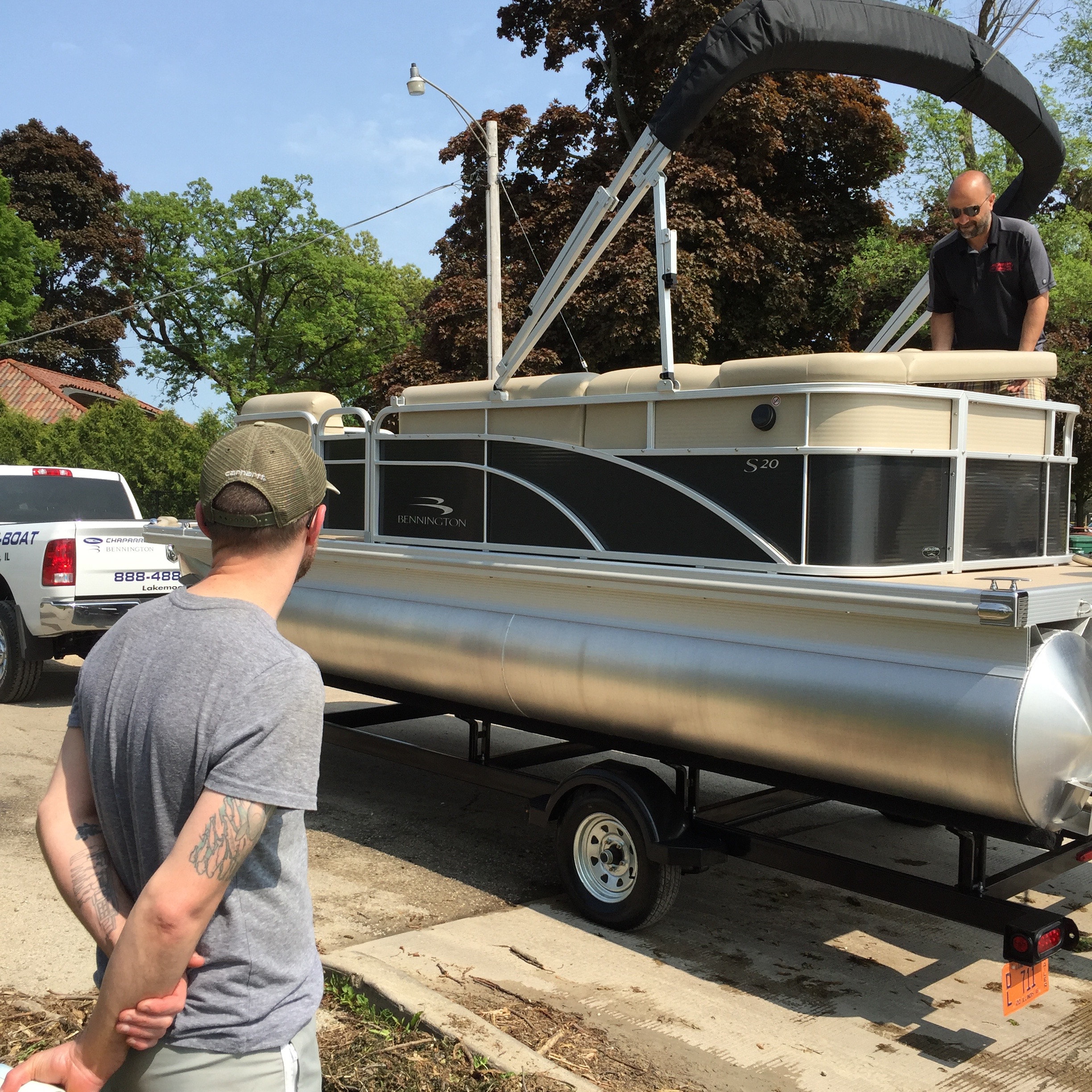
So, after years of research (yes, I know I’m prone to hyperbole, but in this case I’m telling the truth [and if you know Trevor at all, then you know how truthful this is]), we got a 20 foot pontoon boat from a dealership in Volo, near the Chain O’Lakes.

As soon as we boarded, we knew it was the boat for us.

T in Captain's Seat

This feels right.

It even came with a bird. We couldn’t convince her to stay with us, though. She mentioned something about moving out West to San Diego. She has some friends out there with a nest-building business; she’s going to do inside sales for them. It sounded nice.

We almost convinced this bird to come with us, but she wanted a nice nest in San Diego instead.

Good luck, bird.

After doing the paperwork and getting the necessary registration and city stickers, we had five days until the boat would be delivered, and we needed a dock to park her. Our beach association has a pier, but boat owners are responsible for building and installing their own docks, so Trevor set to work to figure out how to do it.

He called his dad, the trusty and skilled carpenter, John Power, and secured his availability for the build and install. There was a yet-to-be-installed dock sitting on our beach, so Trevor took a look at that to get an idea of what he needed. He examined, measured, took pictures, drew schematics, and then bought his lumber (pressurized pine) and supplies (poles and augers to be screwed into the sandy lake bottom). And he and John set to work.

The Dock BuildingThere were two sections, each measuring ten feet: one that had an angled end and clipped directly to the pier, and a second section that connected to the first. The first day they measured, cut, and assembled; the second day they measured, cut, and assembled some more, and then they installed the dock in the water. They had to get it in before the boat was delivered at 3 p.m. on May 21, and they got it done with an hour to spare.

They are, in no uncertain terms, my heroes.

These men built and installed this dock.

These men built and installed this dock.

Power DockWith the dock good to go, we were ready for our boat, and it arrived right on time. We met Vince, our delivery guy, at the park district’s boat put-in area, and he unloaded it onto the lake. We picked John up at our dock and then drove around for a while so Vince could show us the ropes.

T Watches the Put In

Trevor and the very helpful Vince

Man and His Boat

A man and his boat

John, finally getting to relax after we worked him like a maniac for three days

John, finally getting to relax after we worked him like a maniac for three days

We could have driven around forever, but Vince wanted to go home so we unloaded him, and John finally had enough of us and headed back to Elgin and Fran. We tooled around for a bit longer, then finally headed in so Trevor could get some rest.

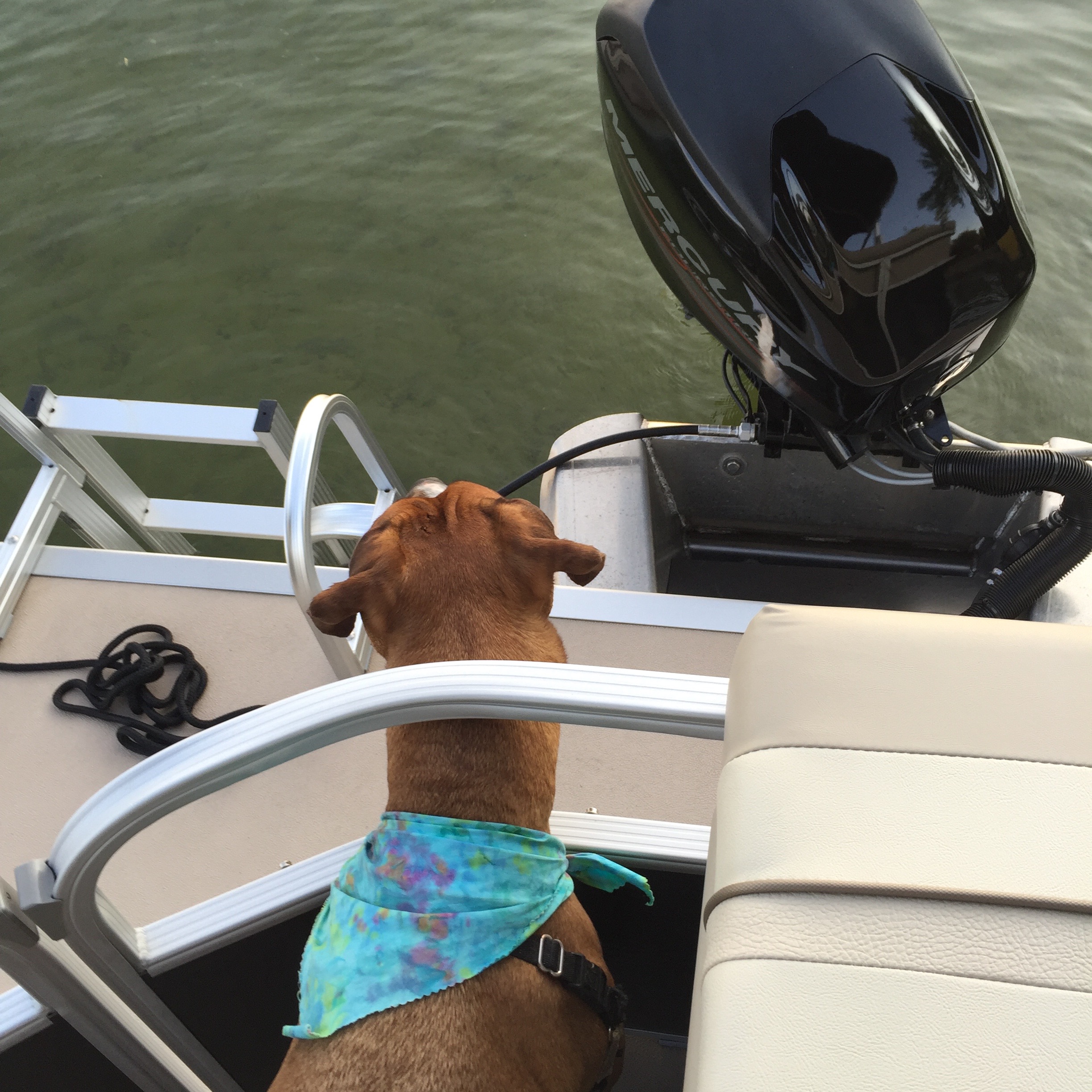
On Sunday we had perfect boat weather. My brother, Greg, was visiting a friend in our neighborhood, so he stopped by and we all went out in the morning. We included Roo, whose last adventures on a pontoon boat were two years ago in Door County — we tried to get her to swim, but she didn’t like it, and then she got very nervous to see everyone else swimming while she was on the boat. Trevor and I hoped she’d be better this second time, because it won’t be as fun this summer if she’s not hanging out with us. And she did very well — she only jumped on the bench once, she sniffed everything, she did a lot of looking out into the lake, and she split her time between the sun and the shade. I think she’s going to be just fine.

Roo Watches Water

Roo checks everything out

Roo and Engine

I’m going to teach her how to climb that ladder

T and Greg

Trevor and Greg

L and T on Boat

This is where I’m going to be all summer

T and Roo

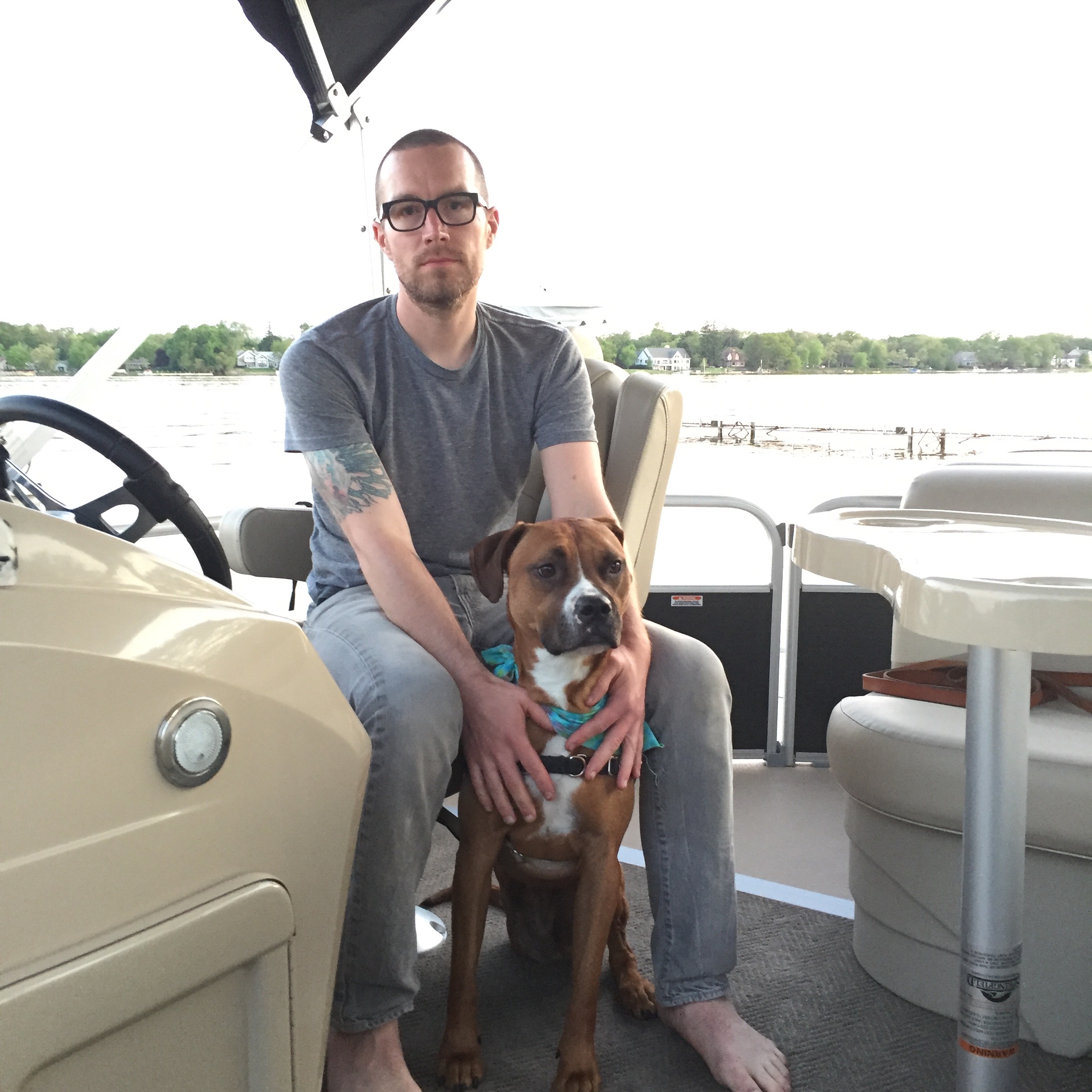
They look very serious for people sitting on a pontoon boat — PONTOOOOOON

So now we’re boat people! I got us matching Camp Crystal Lake t-shirts at the Walker Stalker Convention this weekend (a post on that is forthcoming)…

Yes, we will wear these at the same time

Yes, we will wear these at the same time

…and we’re going to name the boat ( we have a short-list of choices, and we’ll let you know that soon enough [I wanted to name it the Mrs. Voorhees, but Trevor vetoed me]).

Now, the only thing left is to hold the lake’s biggest dance party!

Trippy

Last weekend Trevor and I took a trip to Indianapolis. The trip was T.’s belated birthday gift because our primary destination was the Kurt Vonnegut Memorial Library, but we made it a weekend full of wandering, cocktails, and small-dose luxury.

We started out Saturday morning with breakfast at Milktooth, a hipster heaven that had been recommended by T.’s coworker Leah. I had an a-maAAAaaaazing duck-egg grilled cheese (oh, you know, just a Gruyère grilled cheese on cranberry bread topped with a fried duck egg and drizzled with black truffle honey [OH MY GOD]). Trevor had something that was equally wonderful but I can’t remember what because all I remember is my grilled cheese sandwich. It. was. so. good. No pictures were taken during our meal because, well, because I had to immediately start eating my food. Because, cheese.

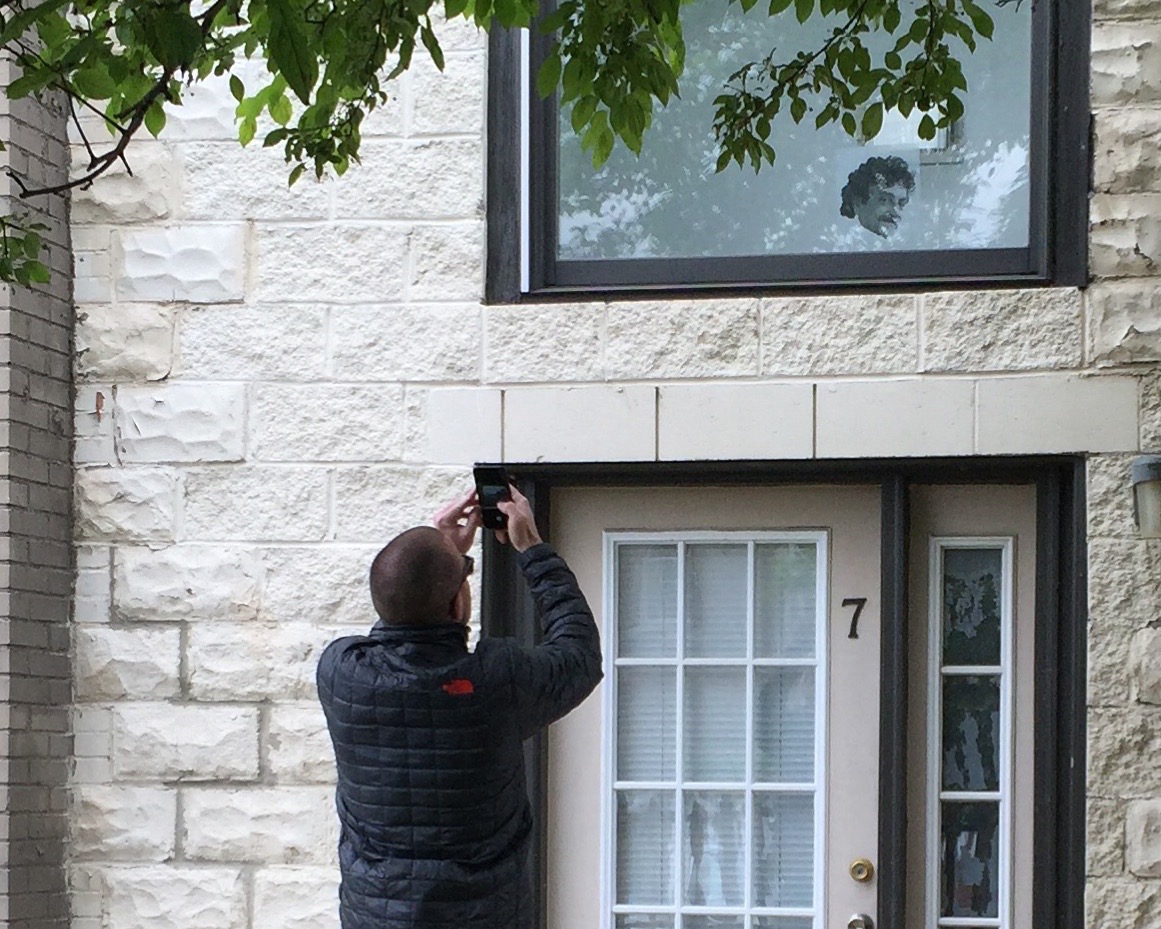
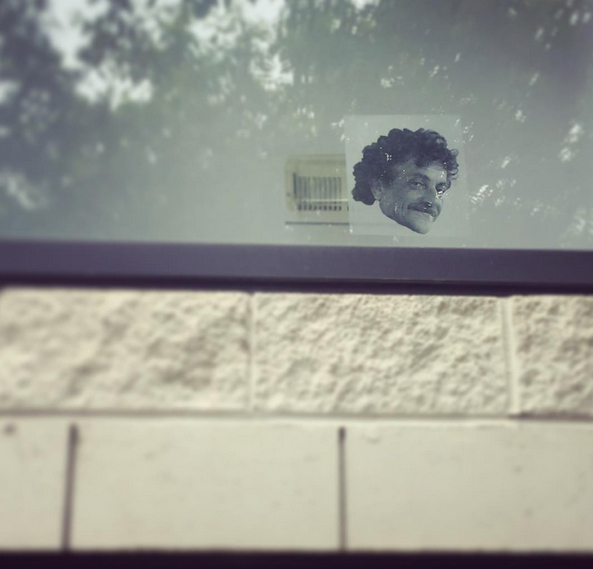
But while we waited for our table, T. made our first Vonnegut sighting and got a picture.

Vonnegut saying 'hi' while we wait for breakfast.

Vonnegut saying ‘hi’ while we wait for breakfast.

Vonnegut Sighting

After we ate, we headed to the KVML, but it wasn’t yet open because I’d been looking at their weekday operating hours, and it was Saturday. We had about twenty minutes to kill, so we wandered to the Indiana State Capitol just a few blocks away.

Instead of joining a tour, we just meandered up and down the floors and through the hallways, reading plaques and enjoying the loveliness and quiet of a 128 year-old bureaucratic building on a Saturday morning.

Indiana State Capital Atrium

Indianapolis Capitol Dome

Indiana AnimalsBut the best part of visiting the Capitol came as we were leaving. Since it was a Saturday, visitors had to come in through a side entrance on the lower level and take an elevator up to the main floor. The lower level — the basement — was dark and had a lot of hallways and ramps that just begged to be explored. Since the only security was in a hallway by the entrance, T. and I decided to peek around to see what we could see.

And we saw where the Indiana State Representatives and Senators wash their dirty laundry.

Capitol Basement 1

Yeah, we were really not supposed to be down there.

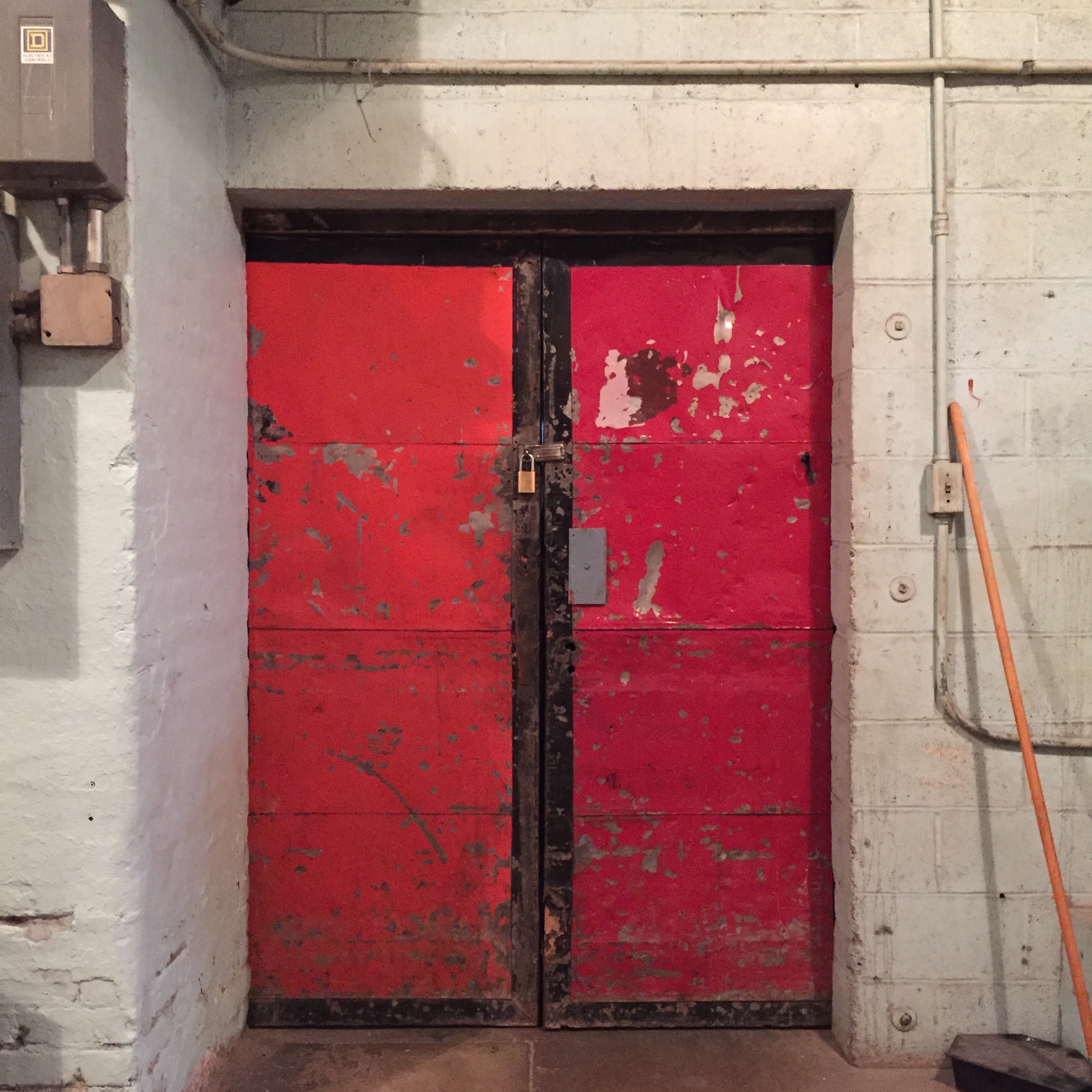
We saw where the Indiana Congress probably keeps any misbehaving guests.

They're behind this padlocked door.

They’re behind this padlocked door.

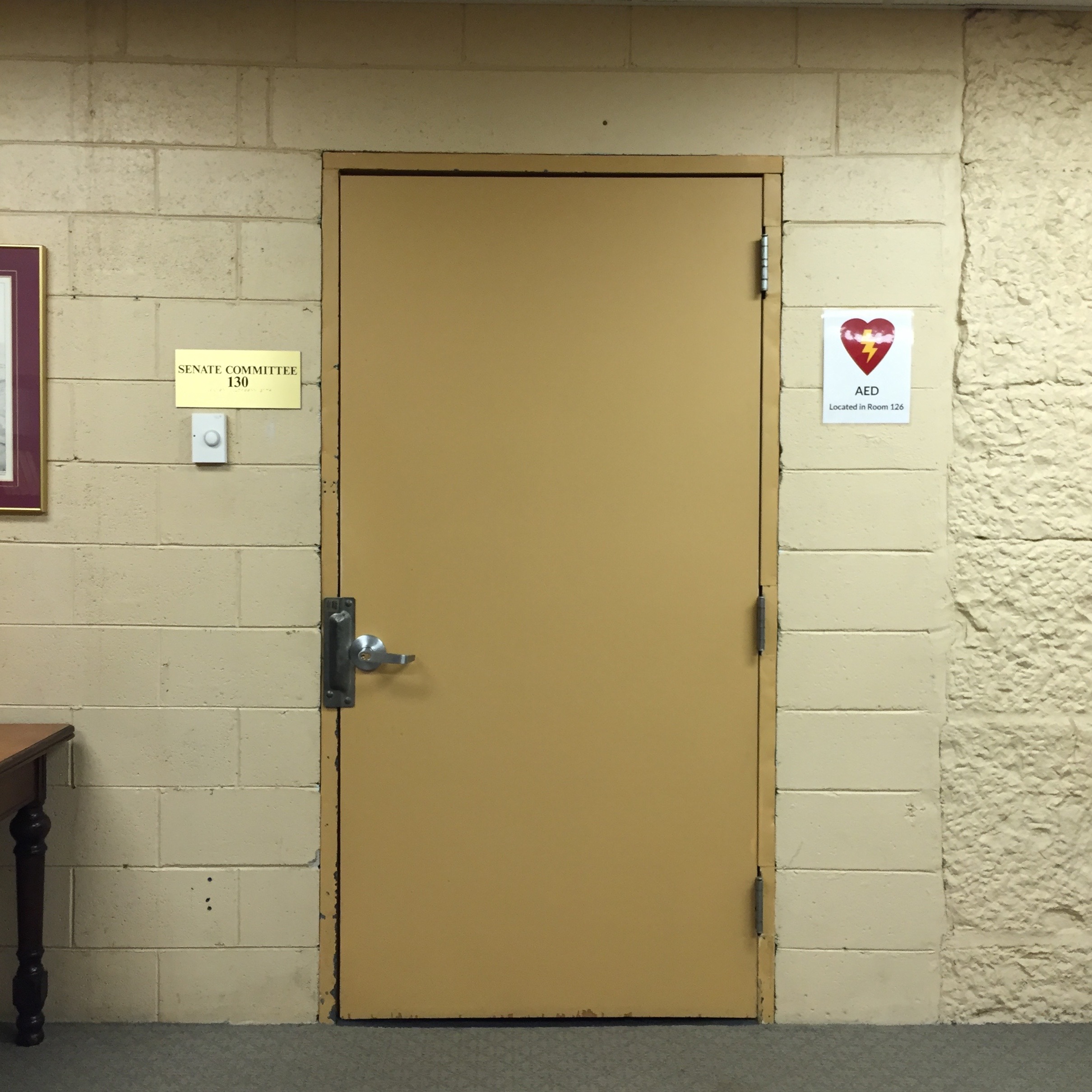
We saw where the Senate Committee 130 meets. They’re clearly the least-liked of all the committees in the history of the state of Indiana.

This is an unfortunate meeting room.

This is an unfortunate meeting room.

And we saw that some of the people working in basement offices have a fun sense of humor.

The Propaganda Machine

We finished wandering and headed to the library, which was open and waiting for us.

A replica of his home writing area.

A replica of his home writing area.

The space is small but well curated, with artifacts from Vonnegut’s military career and his writing and reading life, his original artwork, and artwork inspired by his work and about his life. The docent on duty was great to talk to and gave me a lot of extra information about Vonnegut’s academic career. Although Vonnegut had done undergraduate work at a number of institutions, he never got a bachelor’s degree; and he only got his master’s degree (from UC, where he’d studied for his master’s in anthropology but never got his thesis finished or approved) after he was told by the University of Iowa, where he’d been teaching in its Writers’ Workshop, that he kind of, sort of needed to have a degree to teach graduate classes. Oh, bother.

Kurt Vonnegut Memorial Library

After we exhausted the library, we headed back to our hotel to rest up before we got to formally relax with a massage at the hotel spa. This is a luxury we’ve enjoyed three times now — first for our anniversary and then as part of a Christmas present from Greg and Paula a few year ago — and it’s so much fun. We felt very fancy, drinking strawberry water and taking “aromatherapy journeys,” and we took zero pictures.

Saturday night we had dinner and drinks in the Fountain Square neighborhood. Highlights included cocktails at a Vonnegut inspired place called Bluebeard and an accidental run-in with the Virginia Avenue Folk Fest. It was a chilly night, so we didn’t hang out too long for many of the bands, but on every block there was some group playing something toe-tapping. One in particular, The Hammer & The Hatchet, who were playing outside of a little shop called American Beauty, were especially great. We came upon them when they were playing their last few songs, and we enjoyed each one. It reminded me of when T. and I were on our honeymoon in Spain, and, while wandering the streets our first night in Barcelona, we came upon a sort-of Spanish polka band playing in a square outside of a cathedral. There was a group of people surrounding them and everyone was dancing and laughing and having a wonderful time. So now I love The Hammer & The Hatchet because they made me happily nostalgic.

And that was our trip to Indianapolis!

But taking the trip and planning this blog post reminded me that I’d never written about our trip to Los Angeles in February, so you’re going to read about that, too. Ha, suckers!

The L.A. trip was piggy-backed onto a trip T. was taking for work. He’d been out there with Callie and Leah for the week to work on the Dad Time project, and when my last class ended Thursday afternoon, I headed to California to join him for the weekend.

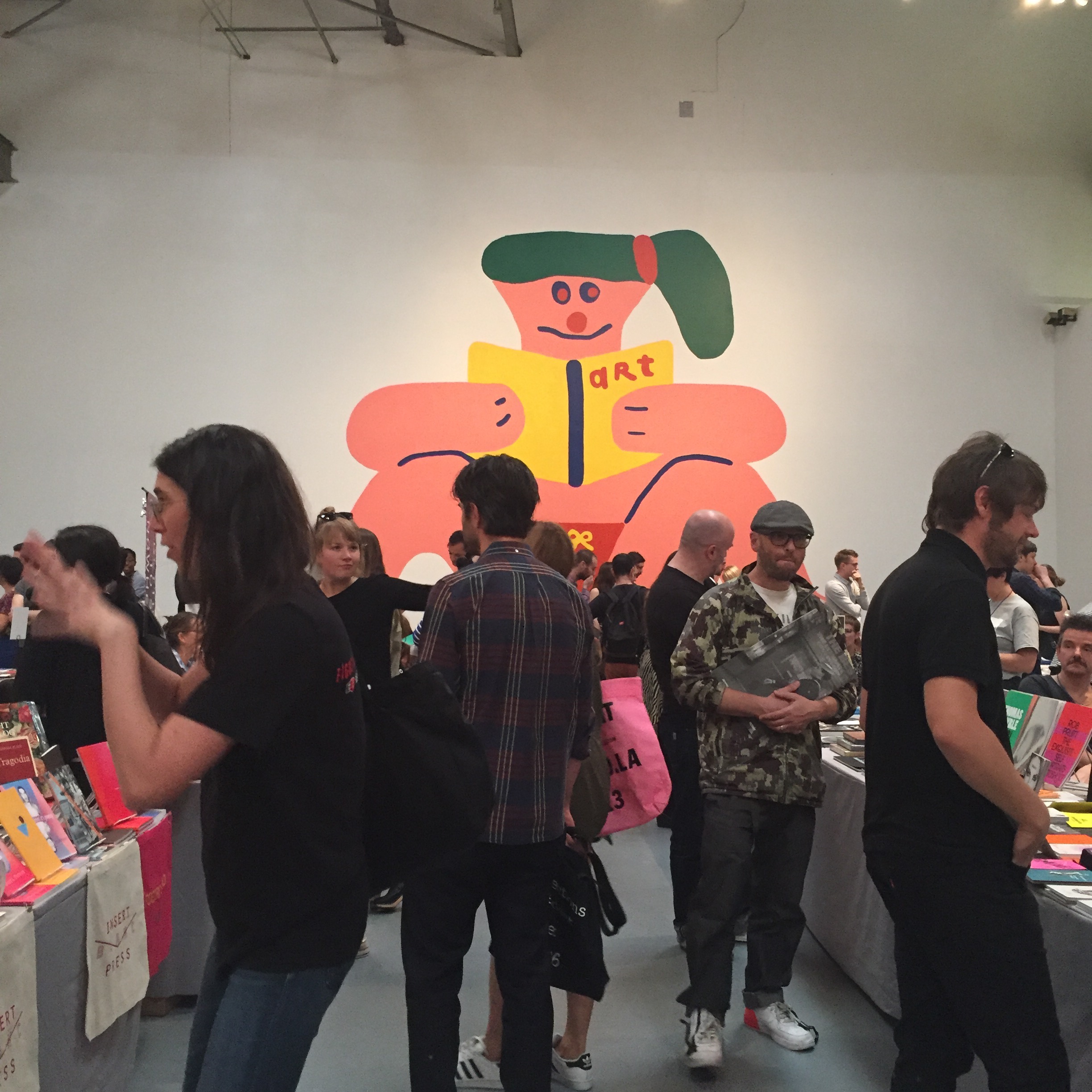
Clearly, because we are who we are, books were a part of this vacation, and we went to the art book fair at the Geffen Museum of Contemporary Art. We spent a number of hours wandering around, and both of us found great stuff for our bookshelves.

T at Art Fair

Yes, that’s a slap-bracelet displayed on a potato in the foreground.

Art Fair

Art.

We also took an opportunity to visit some friends who live in L.A. Our first night we met up with a former student of mine named Arabella, who is working as a writer and having a lot of success. I am the most proud of her that I possibly can be. Even if she was just living in L.A. and working as a cat-sitter and trying to make it, I would be proud; but she’s, like, doing it. She was in the first creative writing class I ever taught at MCC, and she was my editor for the literary magazine for two years. She’s talented, smart, and, basically, the bee’s knees.

I didn’t take a picture of us in L.A., but here she is in my end-of-year class photo from 2009:

Creative Writing, McHenry County College, 2009

Creative Writing, McHenry County College, 2009

Our second night we hung for a bit out with my friend Tim (who I know from my days at Chicago Shakespeare Theater) and his wife Annie. We hadn’t seen them since our wedding in 2007; they moved out to L.A. the following year to see if Tim could be successful in Hollywood. And, well, he pretty much is. Annie teaches theater at a high school for the arts, and they have two cool little kids, who we got to meet for the first time. It was nice to catch up.

We also did our fair share of wandering, and the best place we found to people (and animal) watch was Venice Beach. We saw some birds.

Birds of Venice Beach

Birds of Venice Beach

Bird man.

Bird man.

We saw some surfers.

And we saw some skaters. They were hypnotizing and I could have watched them for hours and hours and hours and been very happy, listening to the sound of their wheels rolling back and forth on the concrete.

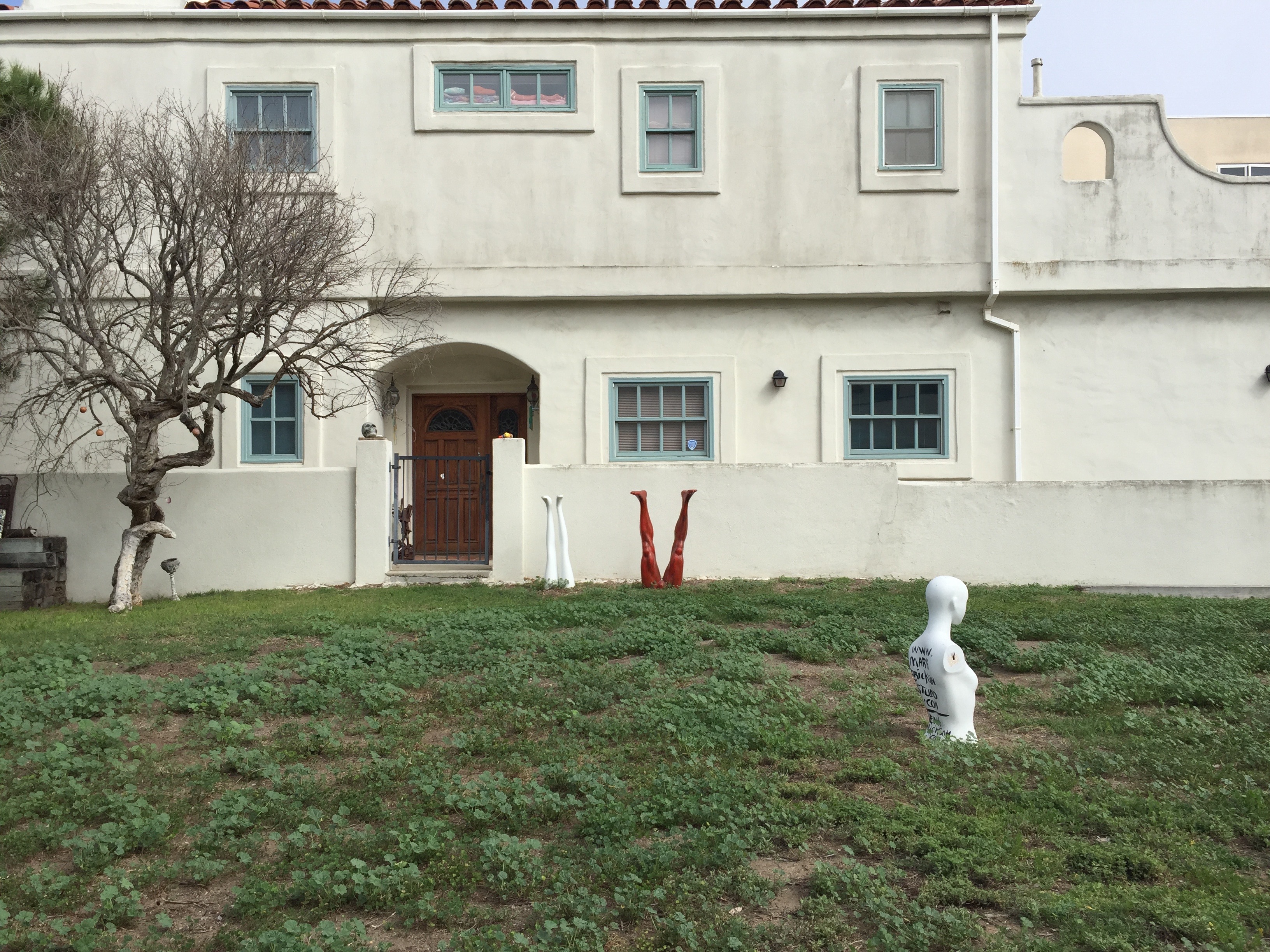
We saw some yard art and walked along the canals, and loved it all, even though our feet were tired.

Venice Beach LegsT on Canal

And our last night, while we made our way through other neighborhoods, we came upon the Hollywood headquarters of the Church of Scientology…

Church of Scientology

We were in a car so we couldn’t stop to creep around it.

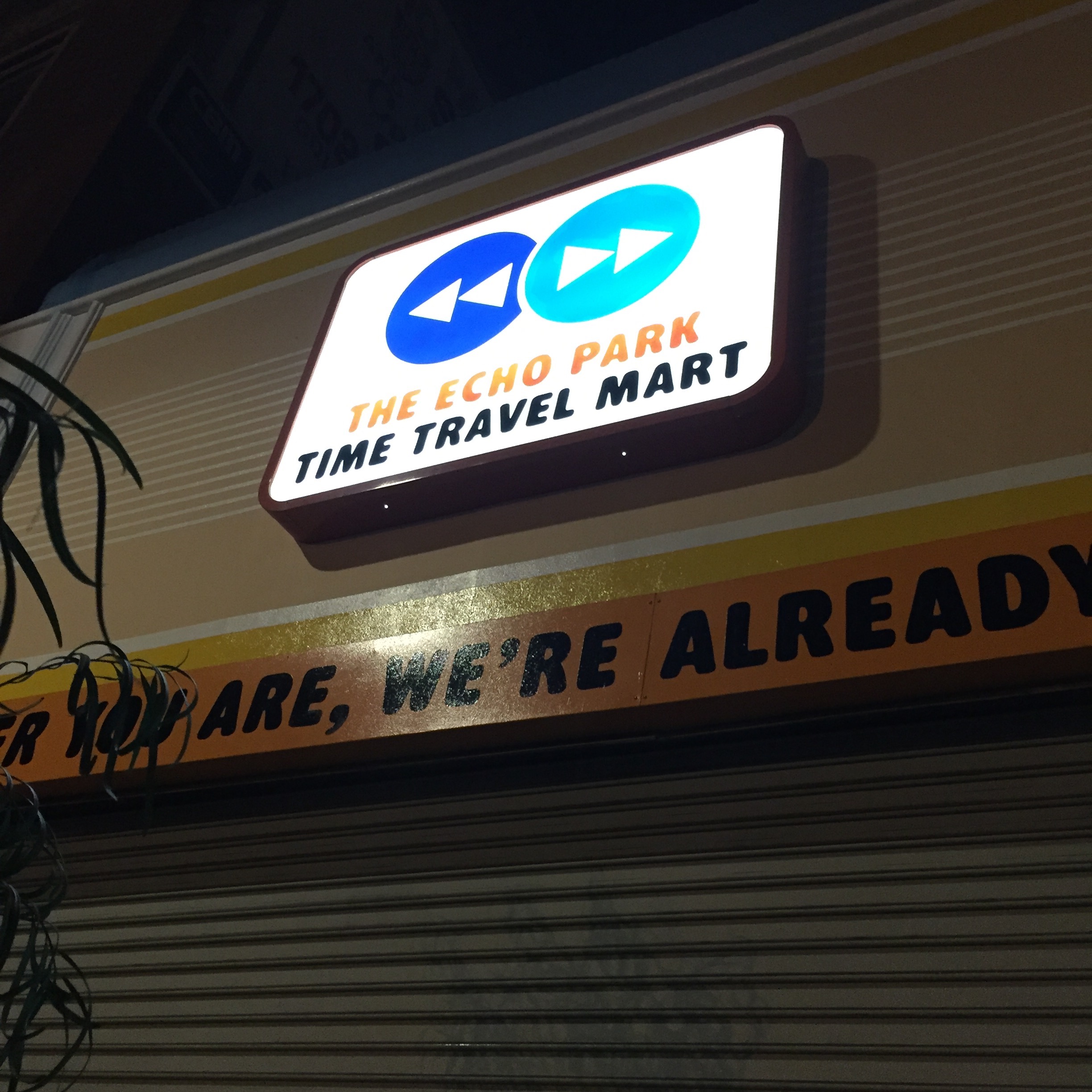
…and the Echo Park Time Travel Mart.

Echo Park Time Travel Mart

Unfortunately, we found it after business hours. We will need to come back to Echo Park again soon.

Los Angeles is pretty weird and pretty wonderful.

So those were our trips! We have other news from Camp Crystal Lake that I’ll report out in other posts over the coming weeks, and I’ll be running another online writing group this summer, so you’ll be reading a lot about that. Prepare yourselves!

Trevor’s Adventures in Florida

For the past nine and a half days, Trevor was in Florida for work. While he was there for a shoot, he and the crew, led by the fearless Callie Lipkin and joined by the smart and feisty assistant Leah Fithian, worked twelve to fifteen hour days. The sun was hot and the culture was definitely Floridian. I have tried to piece together his harrowing true story from the pictures he sent me each day.

The crew for the photo shoot set up camp at a farm southwest of Sanford, Florida, where they would be shooting at various locations. All seemed relatively normal: the house they’d rented was fine; there was a pool; the owner’s fiance, Jude, had a mohawked poodle. The owner, Tracy, asked them to be careful of the horses, and told them that there might be a caretaker coming onto the farm to groom and feed the animals. Fair enough.

But they set out early the first morning only to find that nature didn’t seem to want them to leave the farm.

Natural Roadblock

Something sinister was afoot. But what?

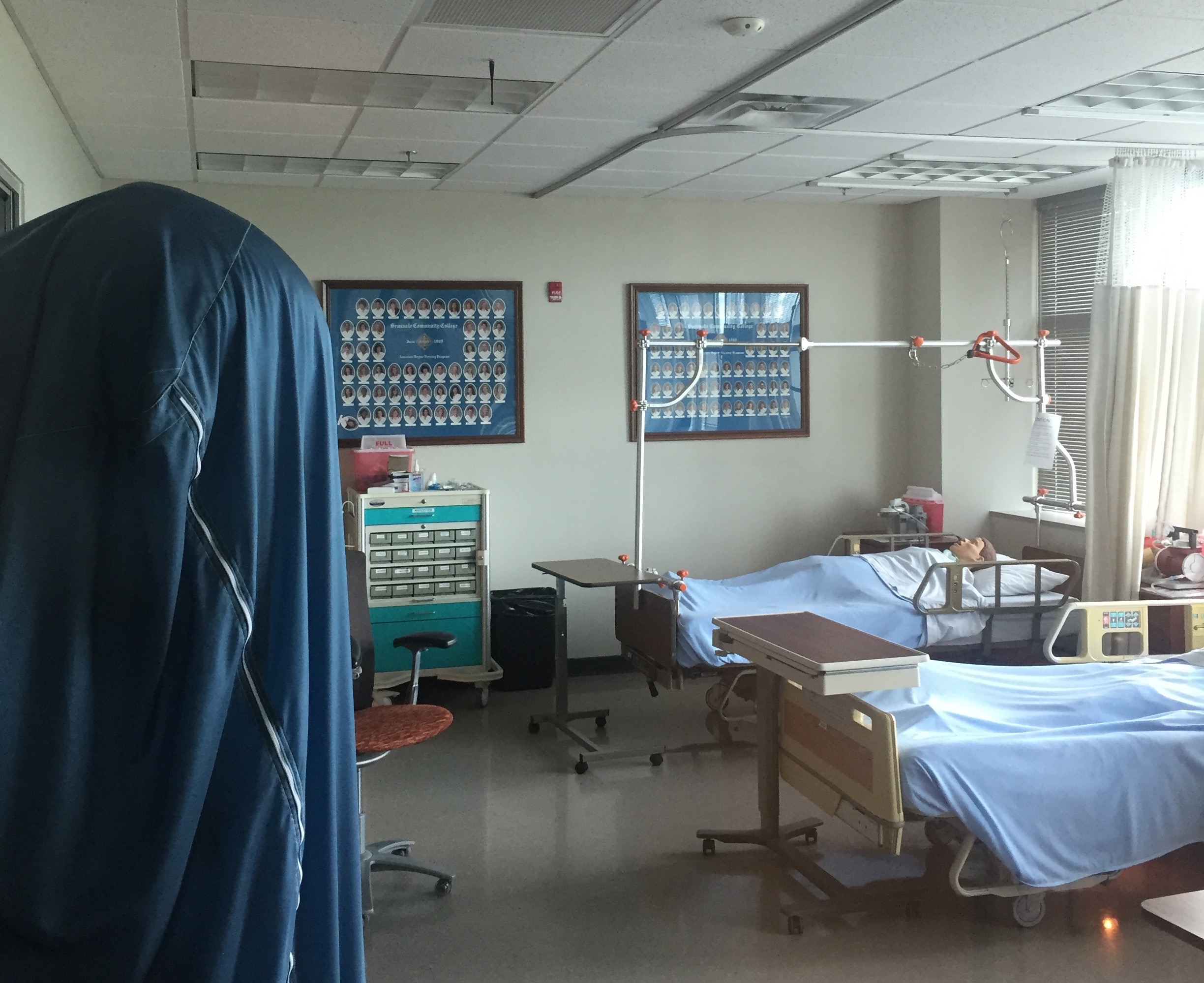
They managed to get around the roadblock and set out to the first location: the critical flesh injury ward of Sanford General Hospital. They were there to document the effects of a mysterious caterpillar that had been found in the area. The caterpillars’ origin was unknown, but the effects of their bites were deadly and devastating. With one small bite, a caterpillar could stun an adult human into full-body paralysis. The paralysis might last for up to eighteen hours, during which time the caterpillar feasted on the human’s flesh until very little was left. Trevor was, understandably, nervous.

The Sanford General Hospital Critical Flesh Injury Ward

The Sanford General Hospital Critical Flesh Injury Ward

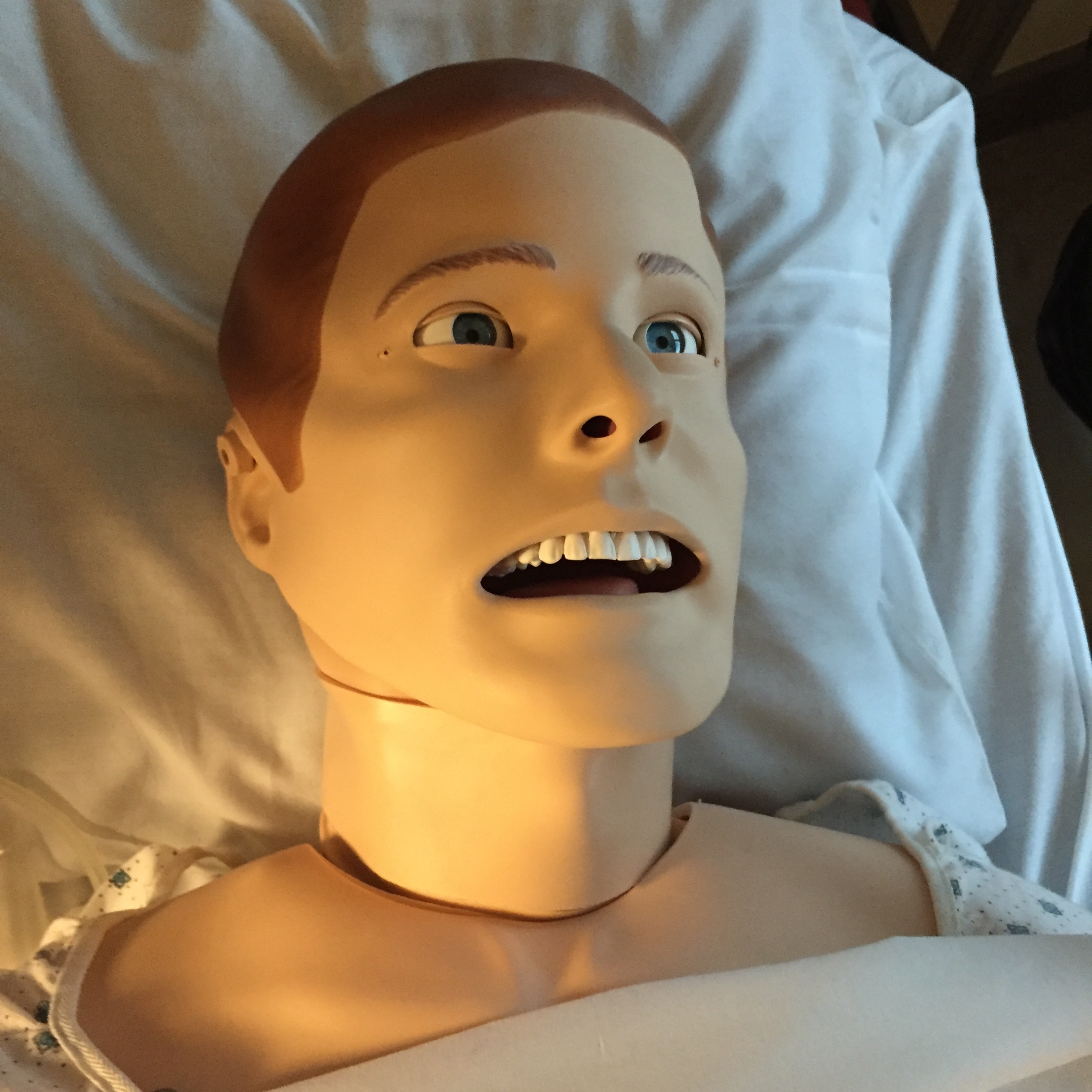
They documented a number of patients who had been attacked by these caterpillars. Though the faces remained relatively in tact, they each had a distinctly artificial, almost plastic pallor that was caused by the caterpillar’s venom.

Medical Dummy Woman

A young victim, Shirley, whose body was decimated by the flesh-eating caterpillars, lays unconscious

Bob, another victim of the caterpillars, was able to give Trevor his first-hand account of the horrifying attack.

Bob, another victim of the caterpillars, was able to give Trevor his first-hand account of the horrifying attack

Trevor and the crew got the shots they needed, and said goodbye to the victims, doctors, and nurses who they’d grown so close to that day. They wished them well and headed back out into the Florida heat, keeping their eyes constantly peeled for caterpillars.

Back at the farm, Trevor did some investigation into the mysterious larvae. Where did they come from, really? What did they want? Was it just the delicious taste of human flesh that motivated them, or did they yearn for something else, something bigger? What would they transform into once they’d spun their creepy little cocoons?

Trevor ponders the questions: How can we communicate with them? How can we harvest their tiny brains for science?

Trevor ponders the questions: How can we communicate with them? How can we harvest their tiny brains for science?

Without many answers and with even fewer hours of sleep, Trevor and the crew left the next morning to continue documenting the devastating impact of these tiny, furry monsters. The crew, a rag-tag bunch of heroes from all over the country, was spirited yet alert to the dangers of the caterpillars and to their own importance in the fight for the survival of the human race.

Three of the caterpillar fighters, getting reading for battle

Three of the optimistic caterpillar fighters, getting reading for battle

They decided that the zoo would be a logical place to look for the caterpillars. Wouldn’t the creatures want to be among their own slithery and furry kind? Very likely, yes. And the caterpillar hunters were not disappointed. No sooner had they stepped foot into the Central Sanford Zoo did they run into the fiercest fighter in this battle: Ara.

Ara, whose name was inspired by the Greek Gods’ defeat of the Titans, was, true to her name, a warrior. She soared the skies high above central Florida in search of the treacherous caterpillars, and picked them up one by one to bring them back to a giant terrarium housed in the center of the zoo. This terrarium, surrounded twenty-four hours a day by the nation’s leading biologists, entomologists, and cryptozoologists, was under top-secret clearance. Trevor wasn’t allowed near it, but he was able to get a shot of Ara, her handler, and some of the children who were listening to Ara’s tales of battle against the caterpillar hoard.

Janet, Ara's most trusted companion, listens along with the small Floridian children to Ara's tales of battle

Janay, Ara’s most trusted companion, listens along with the small Floridian children to Ara’s tales of battle

That evening, back on the farm, Trevor, Callie, and Leah talked quietly around the dining room table. Did they have it in them to continue? They hadn’t laid eyes on the caterpillar itself, but they had witnessed so much of the destruction the larvae left in their wake. They’d heard the tales of death and woe. Would they be next?

They needed to get out of the house and clear their heads, so they went for a walk on the grounds. They passed by the field…the field where the horses Tracy had mentioned were supposed to be grazing. But there were no horses. Curious, the trio walked to the stables, hoping to see the horses there. But the stables were empty. Where were the horses?

Up to now, the caterpillars had feasted only on human flesh — but were they getting hungry for other species? This was too much for the trio to handle, so they rushed back to the house and closed the door against the night. But there, in the middle of the living room carpet, were Jude and his mohawked Poodle, both being slowly nibbled away at by…a caterpillar! Oh NO!

They ran, grabbing what they could and taking their rental R.V. into the night. As they drove, caterpillars seemed to be falling from the sky all round them, littering the roads with their two inch-long wiggly bodies. Trevor was terrified, but brave. He knew that he needed to capture at least one image of the wicked creature, if only for science:

Caterpillar in Florida

Trevor bravely takes a picture of this evil little fellow when the R.V. stops to gas up at a covered rest area

They drove the R.V. all night and all the next day — all the way back to Chicago. And now, they are safe. Safe from the flesh-eating caterpillars. At least…for now.

Coming Soon! A Post About Trevor’s Adventure in Florida!

Trevor has been in Florida for work since last Wednesday, and he’s been so busy that I haven’t heard much from him. He has, though sent me a number of terrific photos, which has forced me to imagine a narrative for him using these images alone.

And within the next twenty-four hours, you will see that narrative here on this blog. It will be amazing.

Caterpillar in Florida

Trevor and his crew have discovered a new species of insect larvae. It eats human flesh.